Posts

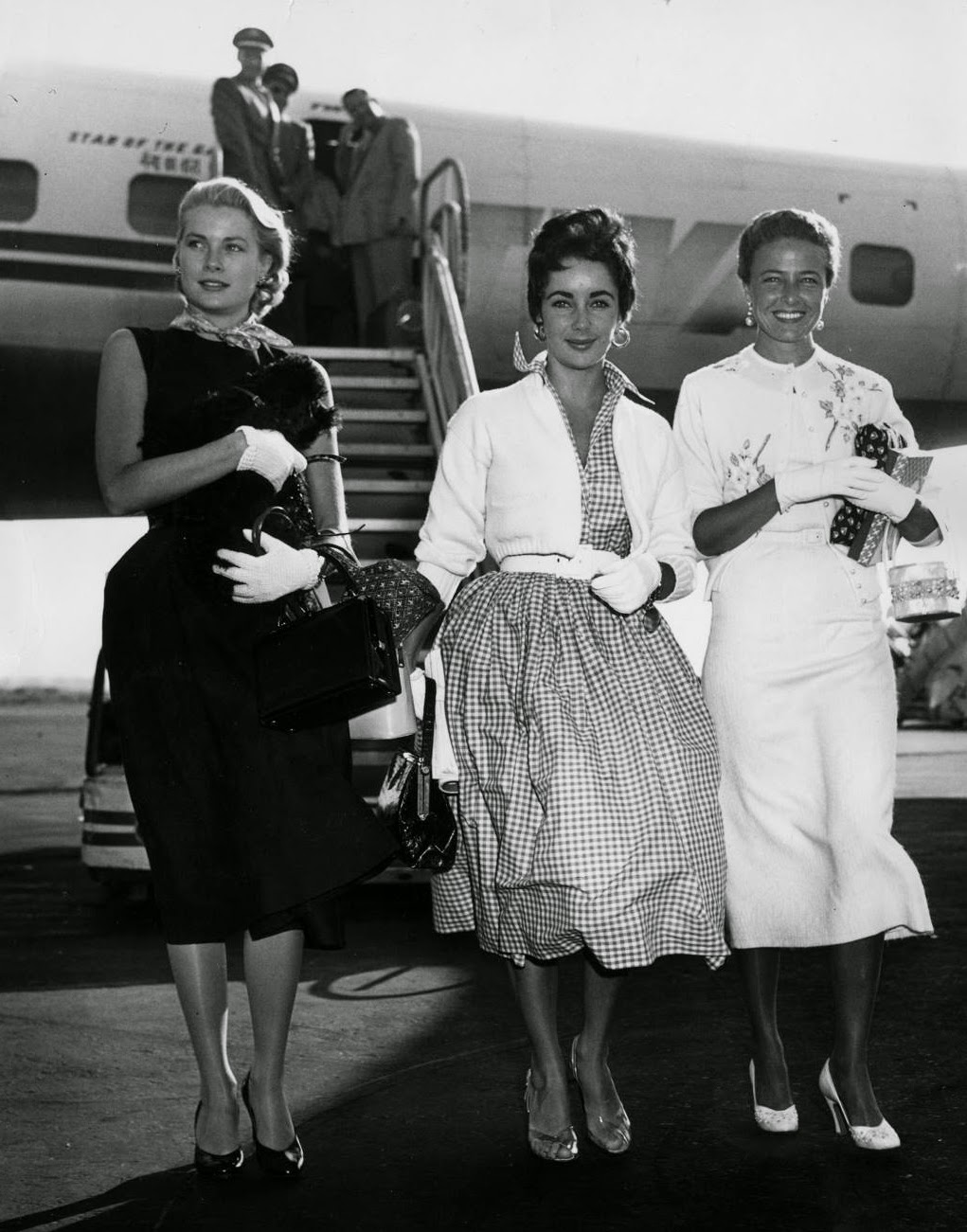
How To Travel In Style: Elizabeth Taylor

Image

Hôtels et Cinéma

Image
   From the Carlton in "To Catch a Thief", to the Chateau Marmont in "Somewhere" and the Hotel Bristol in "Midnight in Paris", hotels in cinema are much more than mere backdrops. A major source of inspiration for filmmakers over the years, some of the most celebrated hotels in the world have played major roles in cinema classics.  The Park Hyatt in Lost in Translation Sofia Coppola fell in love with Tokyo's Park Hyatt hotel when she was promoting her film The Virgin Suicides in Japan, so much that the American director went on to film Lost in Translation there in 2003: a five-star skyscraper that overlooks the sprawling city. The hotel's anonymous luxury fits perfectly with the story of the disenchanted actor (Bill Murray) and lonely young American, played by Scarlett Johansson, who explore the city together in an attempt to rid themselves of their suffocating boredom. Through their eyes, we visit the hotel's empty bar, never-end...

Vintage Adornments

Image
1860's woman wearing a crinoline; being dressed with the aid of long poles to lift her dress over the hoops. Photo by London Stereoscopic Company.

Edward Alfred Cucuel

Image
Born in San Francisco, Edward Alfred Cucuel (1875-1954) was an Impressionist painter of genre and figures in landscapes, often using his family members for models rather than professionals. A specialty was using a vibrant palette and rich impasto to depict women in sun-dappled landscape settings. At the young age of 14 Edward Alfred Cucuel already worked as an illustrator for The Examiner. He attended the Academy of Art in San Francisco and then studied at the Académie Julian, the Académie Colarossi and the Académie des Beaux-Arts under Jean-Léon Gérôme in Paris. From 1896 onwards Cucuel worked as a newspaper illustrator in New York and later traveled to Europe to study the Old Masters. In Munich, he joined the artist group ‘Die Scholle’ and was particularly influenced by one of its members, Leo Putz, and his plein air works. During the First World War Cucuel had settled in Bavaria where he painted his famous and popular ‘Row Boat’ paintings with young ladies. The Americ...

Audrey Hepburn: Cheveux Fabuleux

Image
Looking classically elegant with her pixie crop and floral ivory dress, the image of Audrey Hepburn winning her Best Actress Oscar for Roman Holiday in 1954 is certainly an iconic one. A humanitarian, actress, Givenchy muse and mother, Audrey Hepburn will always be remembered for her kindness, style and grace. Whether captured in one of her famous film looks, or as she arrived at the airport after a long flight, Hepburn's hairstyles epitomised each of the decades in which she graced our screens - from coiffed bobs in the Fifties to sleek up-dos in the Eighties, via the chic Sixties beehives she became famous for. Here's a look back through the hairstyles that accompanied Hepburn's memorable outfits - from androgynous crops to the much-copied chignon she wore for her role in Breakfast At Tiffany's . 1951 - Feminine curls were the required look for her turn on the Broadway stage. 1953 - Hepburn covered up with a headscarf as she arrived in London after ...

Le Crépuscule du soir

Image
Voici le soir charmant, ami du criminel; II vient comme un complice, à pas de loup; le ciel Se ferme lentement comme une grande alcôve, Et l'homme impatient se change en bête fauve. Ô soir, aimable soir, désiré par celui Dont les bras, sans mentir, peuvent dire: Aujourd'hui Nous avons travaillé! — C'est le soir qui soulage Les esprits que dévore une douleur sauvage, Le savant obstiné dont le front s'alourdit, Et l'ouvrier courbé qui regagne son lit. Cependant des démons malsains dans l'atmosphère S'éveillent lourdement, comme des gens d'affaire, Et cognent en volant les volets et l'auvent. À travers les lueurs que tourmente le vent La Prostitution s'allume dans les rues; Comme une fourmilière elle ouvre ses issues; Partout elle se fraye un occulte chemin, Ainsi que l'ennemi qui tente un coup de main; Elle remue au sein de la cité de fange Comme un ver qui dérobe à l'Homme ce qu'il mange...
Plucked from a Renoir painting

Image
Now that temperatures are on the rise, it's the perfect time to dress in sheer fabrics, sorbet shades, candy hues and, my favorite spring standout, floral dresses. There's nothing more wonderful than to indulge myself in sugar-coated lace or the most idyllic of flower prints and join the spring's graphic garden party. This time, I chose a Renoir inspired dress. His paintings portray the beauty and color of life and I always used to say that he redefined the way we view the world with his keen eye for feminine seductiveness. Renoir's work is so full of charming people and attractive sentiment, yet what lingers is not an excess of sweetness but a freshness that is not entirely explicable. The warm sensuality of Renoir's style made his paintings some of the most valuable and influential in the world, frequently reproduced in the history of art. If only all artists were so lucky as to see just what sort of impact their work had on future generations and the wo...